Choose Awesome

A dignity-first exploration of choices, contexts, and consequences—and what we do next.

There is plenty going on in the world, I live a short 40 minute drive north of the border between Canada and the United States, it’s February 20, 2026 as I write this and when I stood up out of bed this morning like every morning for the last very many years now I said outloud, “Today is going to be a great day.” And…I meant it. Like absolutely everything that happens in this life since I was cognizant enough to capture a thought and had a modicum of frontal cortex control, I have the ability to choose my response. I have agency, which, like everyone else, some days I use wisely and some days, like the character Walter Donovan in Indiana Jones and the Last Crusade, though thankfully not with the same consequences, many observers could say of me, “he chose…poorly.”  I am particularly grateful for those times when I am the first to recognize that I have chosen poorly and can make efforts to seek forgiveness from those I have truly offended and change my course. 

I am, by nature, a very positive person. I tilt to seeing the good in people and the prospects of bouncing back from mistakes and events that did not go, or are not going, as hoped. My hope is to share thoughts on a wide range of topics to shine a light on what it means to be on a team with no limits on membership, and that can’t be defeated, even in the most trying of circumstances. I have long been an advocate of the core concepts that I’ve come to embody or define as being on Team Awesome. I try to acknowledge the awesome efforts of those around me and invite others to “be awesome” or “stay awesome” in all they do and say. In short to “Choose Awesome.” 

As I alluded to above, at the core of all this is agency, the ability to choose your response regardless of circumstances. To meet actions, behaviours and challenges that conflict with all that is meant by character traits like grace, honesty, humility, integrity, gratitude, pride (note there is a good pride and it has, as C.S. Lewis noted, an evil twin of the same name1), cooperation, and more, much more really, and chose how I will respond. Sometimes it’s hard, and sometimes the response is to express your concern and invite someone to reflect on other options. Even then, there is a choice about how those concerns are expressed, and I really strive to achieve a high score on the “respond with dignity” index. (I’ll share more about dignity.us over subsequent posts – they have done great work, and have great resources for individuals, teams and schools) 

Go Old School – Stephen Covey’s Fifth Habit of Seven

Then again, sometimes it’s really quite simple, you can capture the very essence of choosing awesome, and being a member of team awesome when you remember that the person you see in the mirror and every single person you see out the window (and there are a lot more outside the window than in the mirror) hold so much more in common than is different and the elements we hold in common that are eternal in nature,… well my friends, those are the foundational elements that do allow us to expect a bit more of each other. To pause and to consider Covey’s fifth Habit, “Seek first to understand…” Understand is not the same as agree but it’s an important sequencer, if someone is way out from where you or I would like them to be, there is a much better chance that they will be interested in what I have to say if I seek first to understand and then, work on the other part of that 5th habit, …and then be understood. 

I will share more about what this Choose Awesome/Team Awesome Global looks like to me over the weeks, months and years I have left on this planet; I don’t anticipate dying anytime soon, I’m not at the don’t buy green bananas stage, but I have more years in the rear view mirror than on the trail ahead.  

I hope to highlight some great efforts others have undertaken to help us lean into being our best selves. To be clear, being our best selves should exist in an abundance mentality, one that is not scrambling to have more at the expense of others, one that brings out the very best of others and is not given to seeing others as less than. 

To be awesome is to recognize who we really are, all of us that share this marvellous planet that was absolutely created for all mankind. Those of us fortunate to be born in a land of abundance or into a family of limitless possibilities and great peace have an obligation to recognize the blessings we have and do all we can to value those of us who have a few mountains and rivers of trials, through no fault of their own, to climb and overcome. Many with fewer material goods have limitless more character than those with visibly more, even appreciating and honouring that is a step right into Team Awesome. 

I may write about books, news, sports, faith, family, football, leadership, politics, conflict…but it will always look at the issues through a lens of Team Awesome, Choose Awesome, Be Awesome and Stay Awesome and see the potential for everyone to do likewise. 

 I don’t think we can continue down the path that distances us from dignity, limits opportunity, frames conversations as us-versus-them, embraces shaming, and takes no shame in doing so without serious consequences for all mankind. I have sat at the foot of the Lincoln Memorial in Washington, D.C., and directly across from the Peace Statue at the Nagasaki Peace Park. I’ll share more about both in future posts, but suffice to say that far too many people died needlessly in both instances, in part because they failed to see the awesome in others and chose the awesome. I hope you’ll come back for more and invite you to be awesome. 

Cheers,

Rick

Footnotes1 See C.S. Lewis, Mere Christianity Chapter 8 The Great Sin.
Perhaps we can focus on responding with dignity and respect to what is happening and being said around us or about us.

Monday, February 10, 2025
What follows is an AI-generated article inspired by the Robert Reich Newsletter from February 10 on Substack. It was created through a Claude AI Project I have created, which has been directed to write with dignity and respect, steering clear of contemptuous language while drawing on documents and guidelines from the Dignity US Project.  Subsequently, I lightly edited it myself. This version embraces the creative notion from the original that the author is, in fact, Former President Richard Nixon. I want to emphasize that I am concerned, deeply so, by what is being said, announced, executive ordered at this time, I just feel those concerns need to be expressed in a manner that consistently invites better of everyone.

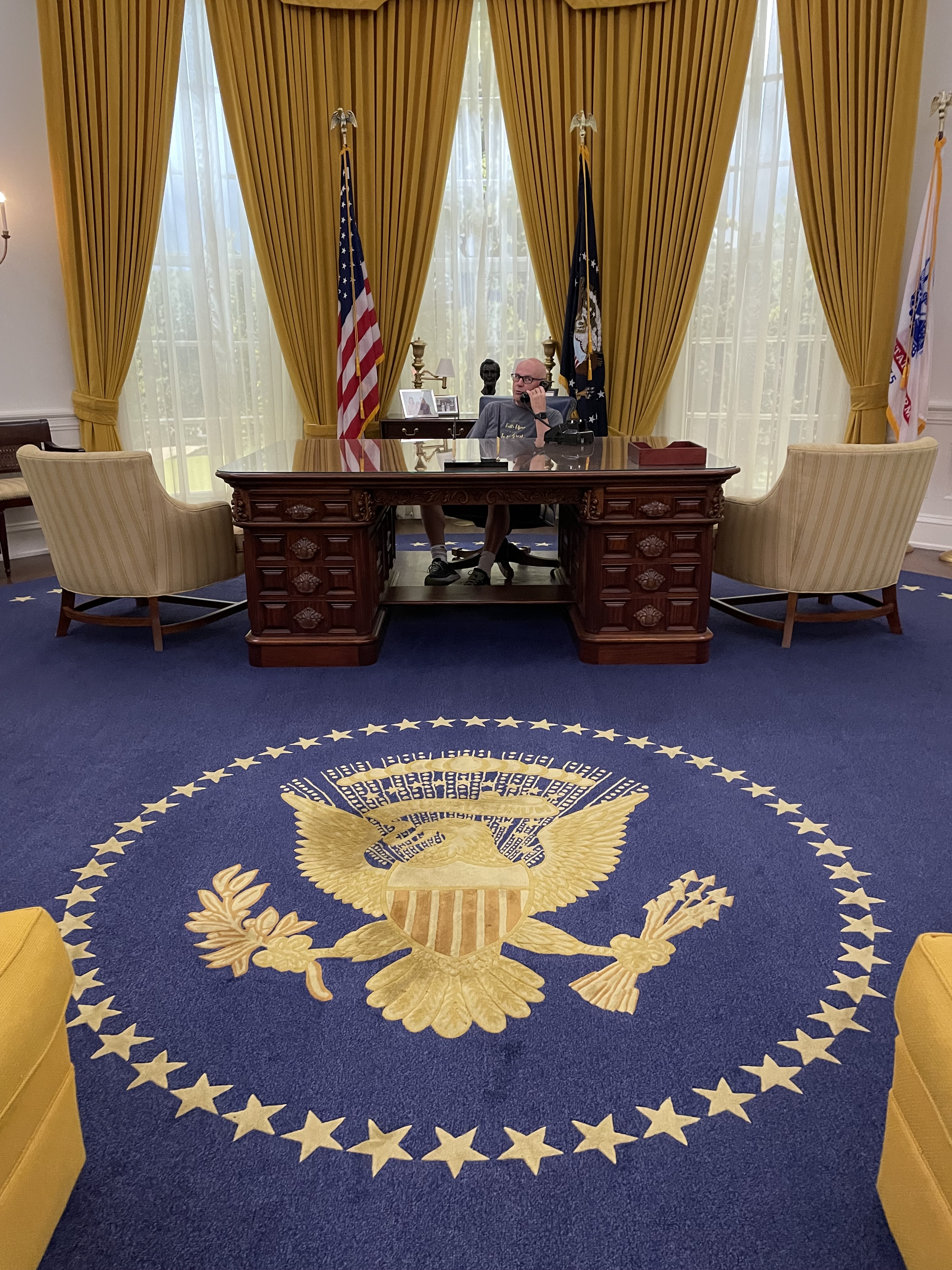
(Incidentally, The Nixon Presidential Library in California, not far from Knott’s Berry Farm, is quite interesting, despite his, at times, critically poor leadership choices. I try to visit all Presidential Libraries when the opportunity presents itself, in my November 2022 visit, I was invited by one of the guides to sit behind the Presidential Desk and “use” the hotline to Moscow.)

The invitation here is to reflect on how we can collectively express our opinions and lead with dignity. Cheers, Dr. Rick Gilson 

—-the alternative AI driven draft —–follows below —- 

An Open Letter on Leadership and Democracy

February 10, 2025

Dear Mr. Musk,

As someone who has experienced both the heights of public service and the depths of political crisis, I feel compelled to share some thoughts about recent events, particularly your Inauguration Day speech and its implications for our democracy.

I write this letter not to condemn you but to engage in a dialogue about the fundamental principles that have sustained our republic through its most challenging times. Your technological achievements have demonstrated remarkable vision and capability. However, recent political actions raise serious concerns about the direction of our democratic discourse.

The gestures and rhetoric at the inauguration evoked historical moments that many Americans find deeply troubling. As someone who once wielded significant political power, I understand the intoxicating nature of authority. Through difficult experience, I also learned how actions that seem bold in the moment can ultimately undermine both personal legacy and national unity.

During my presidency, I made choices that prioritized political advantage over national healing. While my “Southern Strategy” appeared successful in the short term, it deepened divisions that continue to challenge our nation today. I share this not with pride, but as a cautionary tale about the long-term consequences of exploiting social divisions for political gain.

Your administration’s recent activities in Washington, particularly regarding unauthorized access to various locations, echo mistakes from my own experience. These actions, while perhaps seeming expedient, risk eroding the institutional trust that forms the backbone of our democratic system.

Your aspirations for human advancement through space exploration and technological innovation are admirable. However, these goals are best pursued within a framework of democratic principles and institutional respect. History shows that progress achieved through authoritarian means ultimately proves unsustainable.

I encourage you to consider redirecting your considerable talents toward strengthening, rather than challenging, our democratic institutions. Your ability to innovate and inspire could be transformative if applied to building bridges rather than deepening divides.

Leadership in a democracy requires not just vision but wisdom – the wisdom to understand that lasting change comes through unity rather than division, through respect rather than intimidation, through dialogue rather than decree.

The choice before you is significant: Will you use your influence to heal or to divide? Will you be remembered as someone who strengthened our democratic traditions or someone who contributed to their erosion?

I offer these thoughts not as judgment but as perspective from someone who has learned, often too late, the true cost of prioritizing power over principle. There is still time to choose a different path.

With hope for our nation’s future,

Richard Nixon

Also, While CNN’s constant breaking news alerts might seem repetitive, they remind us that our democracy remains vibrantly engaged in current events, even if the presentation sometimes lacks perspective.

—End of AI – Dignity lens version —-

“Hey, Dad…thank-you”

Back in December of 2012 I wrote this post about my dad, Bob Gilson. Almost 10 years later as I ponder Father’s Day 2022 tomorrow I find myself reflecting on Dad passing away on June 28, 2014 just a few days after the last time I was able to visit him. We saw him two days in a row, the first day he was pretty out of it, Randy (my brother) had said it wasn’t looking good so Chauna and I hurried up to Edmonton for a quick visit before wrapping up what was my first of five years working for Westwind School Division in Southern Alberta. As we sat with Dad he was tired, sleeping most of the day, and not responding more than a few nods and “uh huh” type comments.

The next day we were pleasantly shocked to enter the common area to see he was up, dressed, bantering with the nurses, as he turned to say hi to both Chauna and I. It wouldn’t last. Grey’s Anatomy had an episode once where they referred to the “bump” some patients experience as the days are winding down, an exhilarating brief return to a level of alertness that certainly gives hope…for that visit it was great. We watched as he greeted other patients, called us by name and generally was pretty with it, though he asked how I was doing teaching Jr High, something I hadn’t done since June of 1989, but that’s how Alzheimers works, no use correcting just roll with it and enjoy the conversation.

My dad, Robert (Bob) Matthew Joseph Gilson gave big chunk of his life to helping others. I covered a great deal of it back in 2012. As I write this I’m reminded that among all the coaching he did, high school volleyball as a community coach at Sir Winston Churchill in Calgary in the 70’s and Bitty-ball (8 ft rims for little guys/gals to learn the game) for years in Edmonton, he would be particularly upset today reflecting on his two years in Ukraine. Mom and Dad served a mission in Ukraine and while there he was instrumental in facilitating the delivery of child’s size wheelchairs and instituting a full Bitty-Ball Basketball league for the youth he served in the Ukraine while on his mission there for the Church of Jesus Christ of Latter-day Saints.

I can’t help but think that Dad would be concerned for the young people he coached, for the all the people that he served as Ukraine fights for its survival today fending off someone who mistakenly thinks he’s a modern day Peter the Great, in an era where conquering others is not really all that great.

In a little more than a week Chauna and I will head to Vancouver Island to celebrate the graduation of our oldest grandchild from high school. Masen was dad’s first grandchild, he would have loved to be there.

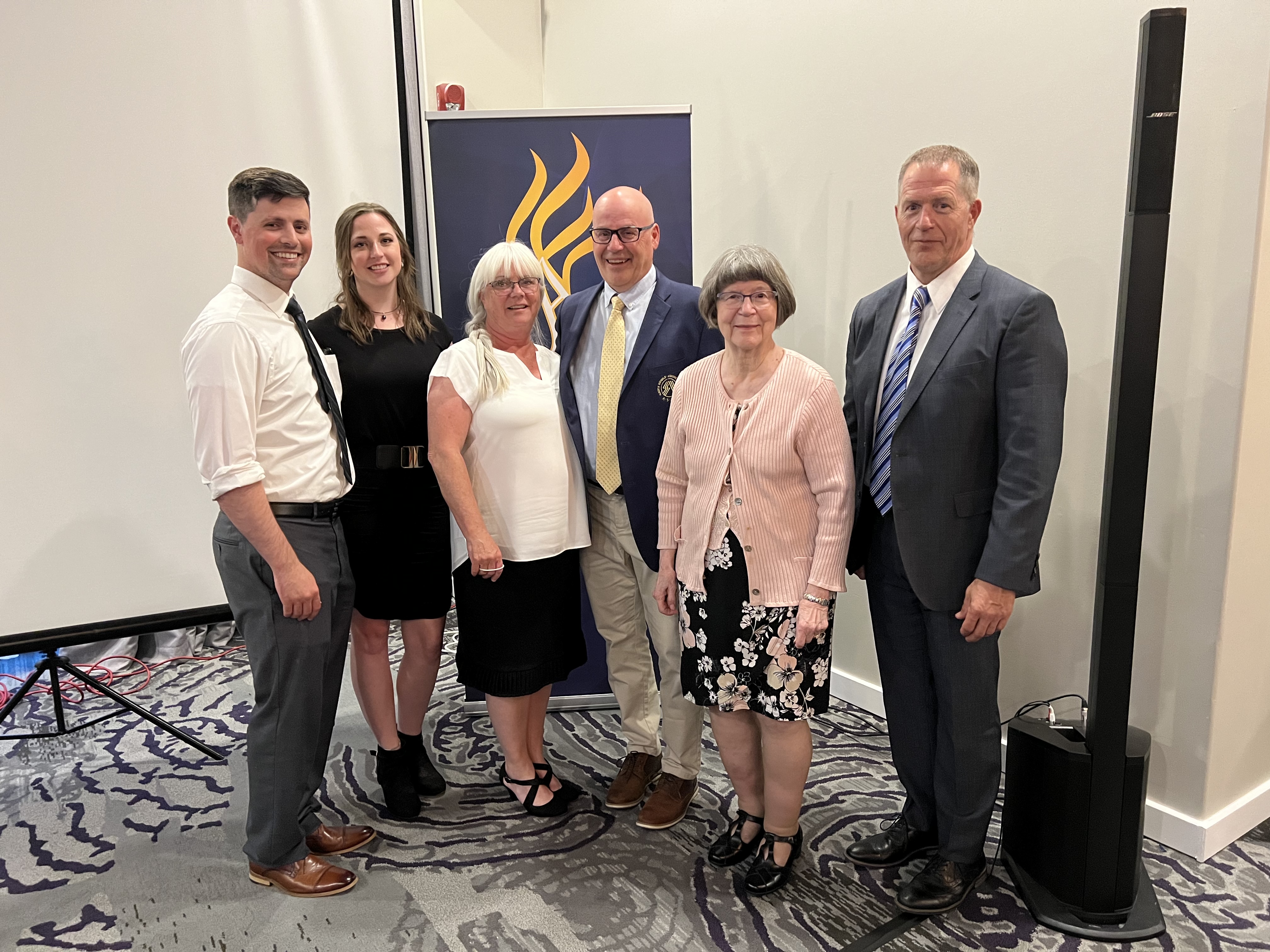
Last night, June 17, 2021, I was honoured to receive the ASAA’s highest honour, the Robert H. Routledge Award. My life path has been greatly impacted by Dad. He helped support my involvement in sports as an athlete, he modelled the commitment required of a coach. He flooded the backyard to make a hockey rink, somehow managed to sneak a homemade basketball standard into the backyard another year on Christmas Eve. I’m not sure he was always quite as sportsmanship minded as I would have liked, one historic outburst toward a volleyball official coming to mind. He attended the games I coached, particularly when my Grande Prairie teams would come down to Edmonton for Provincial Playoffs. I think even my players from the 1995 team would remember dad on the sidelines as we went into quadruple overtime and he would haul exhausted linemen up from the snowdrift and help them get back into the game. Dad would have loved to be there in person last night. Mom made it, Alzheimers now manifesting it’s challenges for her, my brother and youngest son and daughter-in-law representing the family on this occasion. It was a great night.

At the 2022 ASAA Awards Banquet

My dad was not perfect. Neither am I. Perhaps there are perfect dads out there but I doubt it. However it is always a good thing to pursue perfection knowing in the pursuit there will be days of excellence along the way. My dad loved that idea espoused by Coach Lombardi, he expected it of his players and he encouraged all of us boys to work to be our best selves. Any “I wish…” statement I made drew a quick reply from dad, “wish in one hand, spit in the other see which one fills up faster”…the point being if you want it, get to work. Plain and simple truth.

Thank-you Dad, I will see you again, but I’ve got lots of work to do first. Take care.

Character Counts….

Over the Christmas Break I was asked to write an article for the CIAAA (Canadian Interscholastic Athletic Administrator Association) Newsletter. I thought I’d post it here as well.

“Character counts…unless it doesn’t. Sportsmanship matters…unless we face an outcome we don’t like or believe is unfair. These contradictions remind me of a pivotal scene in Shakespeare’s Hamlet. King Claudius kneels in prayer, having gained his throne through murder and deceit. At first glance, he appears remorseful. Meanwhile, Hamlet lurks nearby, contemplating revenge against his father’s murderer. But Claudius’s prayers are empty. His true character emerges in the scene’s closing moments. He feels no real remorse. Instead, he revels in his ill-gotten gains: the crown, his brother’s wife, the fruits of his treachery. Claudius himself acknowledges this hypocrisy: ‘My words fly up, my thoughts remain below, words without thoughts never to heaven go.’

In sports, we face this same challenge of alignment between words and actions. True character development demands more than lip service to sportsmanship. We must cement our words with consistent action. When we fail to meet our own standards—and we will fail—we must acknowledge it plainly. No excuses. Only then can we do better moving forward.

I have been involved with high school athletics as a player, coach, administrator, and Alberta Schools Athletic Association Board member, Commissioner, President and Past President spanning almost 50 years now from those days as a grade 10 playing volleyball in Calgary and have coached close to 80 teams total in football, volleyball, and basketball.  It is extremely easy to see where character and sportsmanship receives Claudius like lip service and where cultures of character and expectations of behaviour and appropriate response have been taught and acted upon on a consistent basis.  Is there really a “good technical foul” a necessary “unnecessary roughness” or a sportsmanlike, “unsportsmanlike penalty”?  I will never believe there is.  Our language, our actions, our instructions to our team in terms of how they will carry themselves, in fact how we will carry ourselves, win, lose, or draw in every moment sets the course for what we will do, how we will respond under pressure. 

These are sports we are involved with, high school sports for the most part, and while it’s a wonderful thing to win and we all believe that sports provide great lessons for life, too often we fail to acknowledge that many of those lessons are how to properly respond when it doesn’t go the way you wanted or believed it should go.  I have heard some form of the phrase, “Character isn’t developed in times of pressure, that’s when it used” on many occasions.  I do agree in the immediate moment of response that is where our character is at that moment; but believe further that we learn in that moment and from that moment refining our understanding, polishing the practice of great character when we have chosen well and reflecting on how we might choose a better way when we have chosen poorly.  We can all continue learning every day.  We are all role models – sometimes we are role models for what people shouldn’t do, sometimes for what they should.  There are much harder things going to happen in our lives, and in the lives of our players than anything that will happen in sports. 

I want every shot to go in, every serve to be good, every play to succeed.  I’d prefer my team to be ranked as high as I see them, I want to win every game, but the Rolling Stones nailed it years ago, “You can’t always get what you want, but if you try sometimes, you just might find…you get what you need.”  What we need is to be resilient, you hear that word a lot and resilience is directly tied to being a person of great character under pressure.  A resilient person can celebrate the success of others even in a situation where it means the other person wins the moment at their expense.  Live it. Lead it. Don’t just speak it or think it.   You always have a choice…choose wisely align your words with your actions in private and public, your coaches, athletes, friends and family will follow. 

“It Wasn’t All Bad…”

Shortly after the media announcement on May 28, sharing the discovery at the Kamloops Residential School site I found myself in conversation with a couple in my region.  While expressing sadness as a grandfather and father at the news my friend made the comment, one I’ve heard on many occasions, that “I’ve heard that Residential schools were not all bad”.  There is a possibility you’ve heard it too as it relates to residential schools it is even possible that you’ve heard it directly to your ears from a former residential school student. 

To be clear, it is vital to honour the opinion of each residential school student, that is their lived experience.  Personally, as a descendent of settlers to this land, as a non-First Nations, Métis, and Inuit citizen of Canada it is important to acknowledge that whatever good may have come the price was too high.  The intent, indeed the unequivocally stated intent, of the Government of Canada and those who ran the schools was to destroy families and the culture of the Indigenous people of Canada.

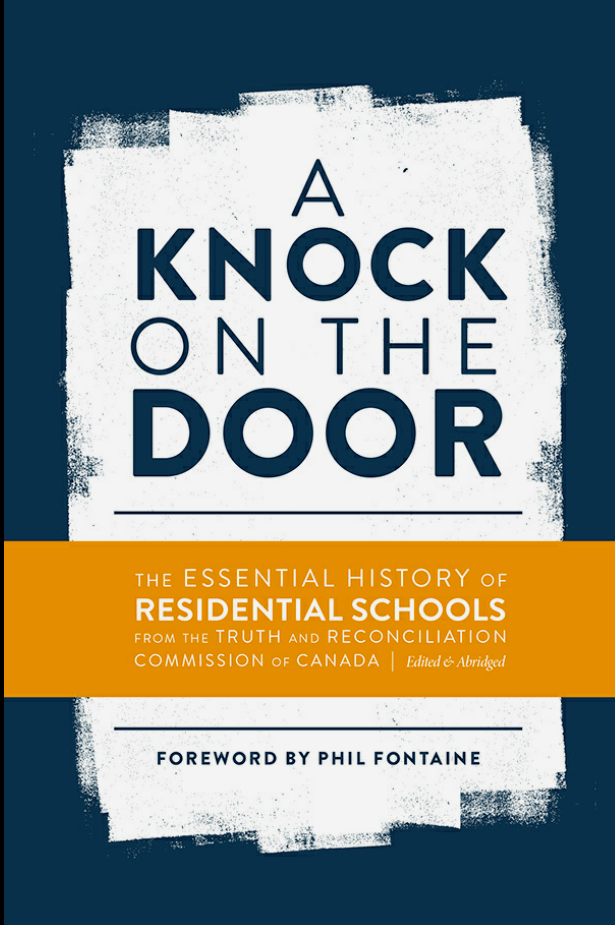
In “A Knock on the Door” (Craft, 2016) we read, “Canada’s first prime minister, Sir John A. Macdonald, told the House of Commons in 1883: When the school is on the reserve the child lives with its parents, who are savages; he is surrounded by savages, and though he may learn to read and write his habits, and training and mode of thought are Indian. He is simply a savage who can read and write. It has been strongly pressed on myself, as the head of the Department, that Indian children should be withdrawn as much as possible from the parental influence, and the only way to do that would be to put them in central training industrial schools where they will acquire the habits and modes of thought of white men.”  

In 1920 Deputy Minister of Indian Affairs doubled down on this intent when he stated, “our object is to continue until there is not a single Indian in Canada that has not been absorbed into the body politic.” (Craft, 2016). Wiping out the culture, was the government objective and for at least some of those supervising the Residential School operations across the country the stated goal as phrased by Bishop Vital Grandin in 1875 was, “We instil in them a pronounced distaste for the native life so that they will be humiliated when reminded of their origin.  When they graduate from our institutions, the children have lost everything Native except their blood.” 

I openly acknowledge that I yet do not have the level of understanding of all that occurred from the first contacts, north, south, east and west across this land to the present day.  I believe firmly in the adage that the more I know, the more I know I need to know more.  I do believe, particularly when I close my eyes and capture an image of any of my children or grandchildren in my mind and imagine a knock on my door as officials come to take that child away, that this was “all bad”.  Residential Schools as established Canada was bad from the start, bad to the end.  Anything even remotely good or praiseworthy in the Residential school setting could have been accomplished in a manner that supported and empowered a people, their culture, and traditions.  All affected by Residential schools needed the public, all the citizens of the land who knew, to say no to the government, to say no to all the organizations and individuals who suggested this was best for Canada and best for the Indigenous people of the land.  

This failure to catch the stones cast by those bent on destroying a culture and a people is our collective failure. It is a legacy for which we must apologize and work to redeem.  It hurts the heart but embrace every opportunity to know more.  Knowledge is the path to a better nation for everyone.  There are excellent books and resources to help gain that vital knowledge. One place to start, a collection of quick reads with links to dive deeper can be found here https://bit.ly/3g2QzwW .  We must also remember that we should be vigilant, that as citizens of our nation and citizens of mankind across this planet we should have our eyes open to ensure we catch the stones of racism and oppression cast today.  It’s not enough to not throw stones, the anti-racist step is to catch those stones cast by others.  I find myself pondering this point when I think, I’m positive I would have stepped up and said, “This is wrong” had I been alive when Residential schools were championed.  Did I catch stones, stand up and say no today?  

Craft, A. (2016). A knock on the door: The essential history of residential schools from the Truth and Reconciliation Commission of Canada. Winnipeg, Manitoba: University of Manitoba Press.

Taking on resistance with Tim Ferris’ “Fear-Setting” approach

In recent posts, I’ve talked about habits and B.J. Fogg, author of Tiny Habits and James Clear, author of Atomic Habits.  I’ve come to believe in the sustainable power of habits to achieve our aspirations achieving goals or milestones along the way.   I’m very confident in saying that working through those two books and the ideas they present will positively impact your wellness and success rate in closing the gap between where you are today and where you aspire to be in any aspect of your life.  Strategies that help me stick to the process, establish easy routines and see a way forward are key.  Strategies that help me restart as quickly as possible and get back at it that’s where the gold is found. 

I’ve enjoyed much of Tim Ferris’ writing Tribe of Mentors and Tools of Titans provides a wealth of resources and ideas drawn from the interviews with a spectacular spectrum of individuals. Still, it’s an interesting twist on goal setting that Tim refers to as fear-setting that I’d invite you to ponder today.   Woven into Tim’s explanation of Stoicism (I recommend the writings of Ryan Holiday for a deeper dive into Stoicism) is the notion of working through your fears in advance. We waste a lot of energy in worry, ultimately suffering twice, once in the worry and once IF the event occurs.  

I’d suggest that fear-setting invites us to confront the possibilities on the other side of our fears, opportunities we can only realize fighting through the resistance that inevitably exists when we try to improve.  Whatever you are pondering, write it down by asking, “what if I….” and fill in the task.  First, define all the worst-case consequences or outcomes if you do what you are contemplating.  Second, ask yourself what you can do to prevent those worst-case scenarios and finally, what you can do to repair the situation should the worst case occur.   

I love the idea that Tim then suggests we give ourselves some room by contemplating not what happens if we succeed beyond our wildest dreams but instead invites us to answer the question, “What might be the benefits of an attempt or partial success?” Think of how often we stop because we only lost 10 pounds when the goal was 30 pounds; failing to acknowledge the 10 made a difference and is a start, not an end. The principle can apply to any challenge we undertake. 

Finally, where the first what-if exercise invited us to define worst-case consequences, steps we’d take to prevent and repair those situations, the last question in the process invites a reflection on “The cost of inaction” 6 months out, one year, three years and perhaps beyond.  This is a challenging opportunity cost exercise that admittedly is not an exact science but give it a try. Positive and negative possible outcomes over that span help establish the acceptable risk of what we’re contemplating. 

Our choices define our life.  This exercise provides another way to reflect on some of the uncomfortable, risky decisions that come into our lives, push the “fear button,” and sometimes stop us when great rewards are just beyond the challenge or fear.   Give it a try. 

Tim’s Ted Talk – https://youtu.be/5J6jAC6XxAI

Tim’s Blog post: https://tim.blog/2017/05/15/fear-setting/

Clear, J. (2018). Atomic habits: An easy & provin way to build good habits & break bad ones. New York, NY:

Avery.Fogg, B. J. (2020). Tiny habits: The small changes that change everything. Boston, New York: Houghton Mifflin Harcourt.

“The more I know….”

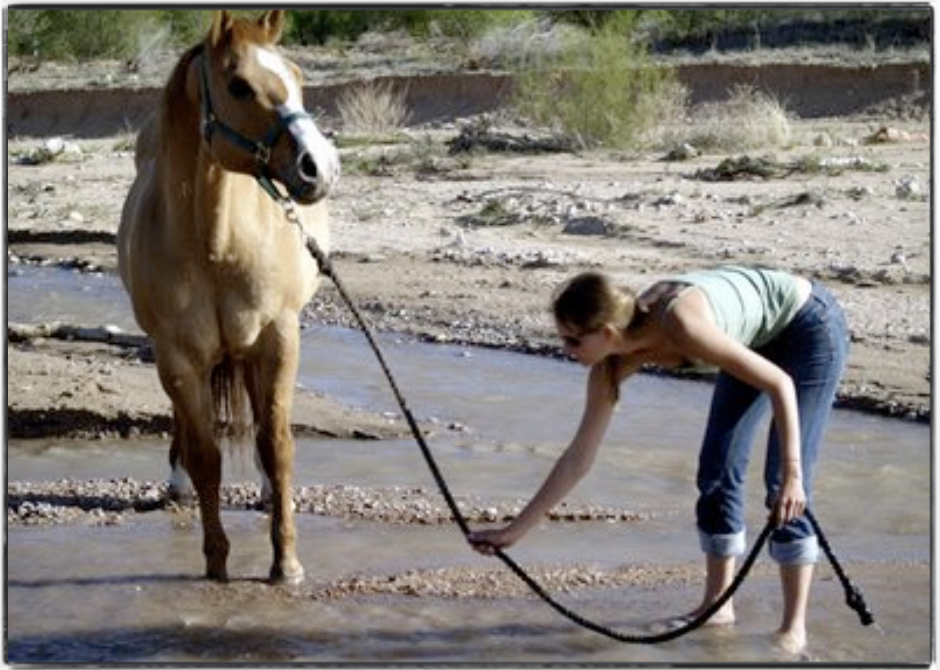
“The more I know, the more I know I need to know more.” This has been a personal motto for a number of years now.  In teaching and learning, I’m comfortable with the idea that I won’t know everything there is to know about even one subject at any point in this life.  That said, the pursuit of knowledge, particularly if it helps me better support those in my life, my classroom, my team is worthy of attention, energy, and time.  I’ve used a slide and saying in many of my presentations it shows a lady with a horse by the stream, the saying I invite everyone to complete is, “You can lead a horse to water, but you can’t make him/her …”  Most of us naturally finish with “drink.”  I invite folks to ponder what changes if rather than making a horse drink, we work at creating the environment where the horse is thirsty.  Presented with water, a thirsty horse will always drink. 

Our work in the classroom, grade 2, 2nd year of university, post-graduate or just ongoing professional and personal learning is about supporting a healthy thirst to know more, improve upon what we do to reach and help those with whom we work.  On a personal level, everything we do to learn a little more should help us in our interactions.  There’s no reason for any of us to hold back on the good stuff, the fine china reserved for special guests.  If we have something that can help; a book, a resource, a video, a Learn N Go, a presentation, we look for every way we can share that work.  If there’s something we think can help, we’re going to do all we can to share it.  If there’s something we’ve seen or heard from you that is awesome, and we see lots of that around the region and the province, we’re going to do all we can to share that as well.  IF there is something about which you are THIRSTY to know more, please don’t hesitate to call or e-mail us and we’ll find a way to help you drink.  Ok, that’s the extended metaphor for this week.  To borrow a line from a commercial series on TV – stay thirsty my friends, to which I’ll add stay safe, stay awesome. 

Reset, Reinvent, Reload —Go!

I don’t know that any of us desires to be average, certainly Todd Rose in his Ted Talk, The Myth of Average and his book The End of Average (2015) would suggest that when we design for the average we design for no one.  Normal is another word that has been used a lot lately, as in I look forward to things getting back to normal.  I am not sure that anything really has been normal for quite some time and it’s fair to question whether normal is really what we want.  

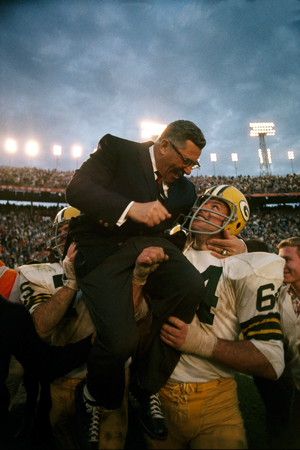
In 1959 the first-time head coach in the NFL, Vince Lombardi, stood in front of his team for the first time, a team that had won one game the year before, and said, ““Gentlemen we’re going to relentlessly chase perfection, knowing full well we won’t catch it because nothing is perfect. But we’re going to RELENTLESSLY chase it because in the process we will catch excellence.  I’m not remotely interested in being just good.”  Over the next nine years they would play in 6 championships winning 5 including the first two Super Bowls in NFL History.  The reset and reframing of expectations in word and in deed set the path. Vince Lombardi reset and reframed the expectations and then ensured the coaches, players and organization worked toward those expectations. The pursuit of perfection indeed led to excellence. 

Jerry Kramer and Coach Vince Lombardi

Let’s look for opportunities to reset and reframe what we do in the circumstances that are presented before us.  It can be in what we read, in what we watch, and of course it’s witnessed by what we do. One such opportunity is the upcoming Student focused Impact Leadership Conference in Alberta, for Alberta student leaders and their teacher/coach advisors that runs the afternoon of May 3 and the morning of May 4.  Earlybird registration ends April 15 ($5 dollars a participant the rate bumps up to $10 on April16)  Student leaders grades 9 – 12 and their teacher mentors can help reset and reframe their own focus and that of the school and their peers.  Check it out here https://www.sapdc.ca/conference/130

Rose, T. (2015). The end of average: How we succeed in a world that values sameness. Toronto, ON: HarperCollins.

What a 365, and now for tomorrow…

Three hundred sixty-five days each of them with 24 hours and each of us presented with the opportunity to decide how those hours, and the minutes and seconds inside each, will be used.  And that’s a year.  Typically, we go from January 1 to December 31 and count that as one.  Educators and students might wind the clock from September 1 to June 30 and define that as a school year, September to April for university, but each is a frame for how time passed.  One year ago, Thursday, March 12, 2020, Julie Stern presented a session on Teaching for Conceptual understanding live and in person at the Enmax in Lethbridge.  North America began closing down during Julie’s presentation.  Alberta started to close down.  

Before the end of the weekend, schools across Alberta cancelled classes on a Sunday afternoon, no less.  Schools closed to students, and suddenly “pivot,” a fundamental basketball skill (all games cancelled, so no need for the word there), became an operative phrase for all endeavours.  We will; we did, pivot from one to another form of instruction, engagement, assessment, connection, living, communicating, greeting new ones to the family and saying goodbye temporarily and in this life to some young and too many old ones across many families.  

It has been a year, not so much to celebrate, yet there is so much to celebrate individually and collectively that it’s essential to find a way.  

There has been suffering and, if not suffering, trials.  Economic trials, holding on to jobs, homes, offices, yoga studios, restaurants, small businesses and large and over 2.5 million deaths accredited to the pandemic worldwide.  So yes, I would suggest stick with suffering.  The year Covid was and is much more than a trial.  And loss.  Any days we might have had with a loved one we didn’t have because of Covid is a loss.  Christmas Dinner was delicious and lonesome.  Zoom could bridge the gap somewhat, but a hug has an extraordinary power, the absence of which is…a loss. 

The Maui Habit might be a little easier with a memory of being in Maui but try it anyway

There is magic in a calendar.  The truth is every day starts a new three hundred and sixty-five.  B.J. Fogg, the author of Tiny Habits, has one foundational habit I just love and frankly plan to use every day as long as I can speak, and then I’ll just think it but still do it.  He calls it the Maui Habit.  I love the name.  It’s simply this, your trigger for the habit is the very first time your legs move out from your bed.  As your feet touch the floor and you begin to rise, you say (out loud), “Today is going to be a great day” (Fogg, 2020, p. 20) then congratulate yourself for saying it.  Obviously, saying doesn’t make it so, but it is absolutely a start.  Building from there, we look at each day for the opportunity it presents to work at achieving all you can to achieve your aspirations, to learn a little more, be a bit more grateful, a day wiser, friendly, connected, fit, to live that day and Sisyphus like push that rock a little bit further up the hill. 

In his book, The Leader Who Had No Title, Robin Sharma (2010) suggests that there are seven fundamentals of personal leadership, the first of which is the importance of learning. I’ve determined in these last 365 that learning is an eternal round, everyone, every day.  There will be “Resistance” (Pressfield, 2002) to any learning; the resistance presents a form of learning itself. Embrace it, look for it and invite learning from every aspect of your life.  Look for people and organizations that can help, read, listen, watch, experiment, try and try again tomorrow.  Inventory the last day and the 364 before that, plan for the next day and the 364 after that but start small and remember as you go to get out of bed tomorrow, the Maui Habit is a great place to start.  It’s going to be a great day.

ps. Any learning day would be a good learning day with a bit of reading from any or all of the three books below:

Fogg, B. J. (2020). Tiny habits: The small changes that change everything. Boston, New York: Houghton Mifflin Harcourt.

Pressfield, S. (2002). The war of art: Break through the blocks and win your inner creative battles. Los Angeles, CA: Black Irish Entertainment.

Sharma, R. (2010). The leader who had no title: A modern fable on real success in business and in life. New York, NY: Free Press.

Taking the Road …not taken

I think for most of my life I’ve called this poem, “Two Roads Diverged in a Wood” I didn’t even get the first line right, never mind the title but I suspect that only matters if someone else tried to look it up, though Google will get you there even if you’re only close.   Choice, both as an opportunity and actually making a choice, has long been the point of the poem in my life.  There is regret in not being able to do everything.  Not necessarily in the choices we make, but in the fact that we can’t do it all right away.  Right now.  That reality doesn’t mean we can never, but then again as Frost suggests, “knowing how way leads on to way, I doubted if I should ever come back” it does present a consequence that closes off one path with the taking of another.  A sense of loss swallowed up in the prospects of the possibilities and outcomes you do have as a result of the choices you make. 

In the end, to see, perhaps that should read seize, the road, to walk it, and live your life as it comes is the key.  Learning along the way, sharing with no regrets, seeking to draw from the interactions with the land, the people, the ways, to live deep as Thoreau suggested that seems to be the key.  I would suggest that it’s critical that we find opportunities to share what you learned on your road and thrill in the stories others learned on their path.  Not a bad way to spend a moment or two. 

So the poem is here…take a read, it’s unlikely it’s the first time but ok if that’s so.

DevinSupertramp, the youtube artist and filmmaker, has put the poem to a bit of a video tour of Ireland narrated in part by this classic poem – I’ve included the link to his video below, I think it’s rather spectacular.

The Road Not Taken

By Robert Frost.

Two roads diverged in a yellow wood,
And sorry I could not travel both
And be one traveler, long I stood
And looked down one as far as I could
To where it bent in the undergrowth;
 
Then took the other, as just as fair,
And having perhaps the better claim,
Because it was grassy and wanted wear;
Though as for that the passing there
Had worn them really about the same,
 
And both that morning equally lay
In leaves no step had trodden black.
Oh, I kept the first for another day!
Yet knowing how way leads on to way,
I doubted if I should ever come back.
 
I shall be telling this with a sigh
Somewhere ages and ages hence:
Two roads diverged in a wood, and I—
I took the one less traveled by,
And that has made all the difference.