
Dare to be, Commit to be, Excellent

Excellence is attainable, there just isn’t any shortcuts.

What is it about the concept of good enough that has become so acceptable when excellence or being exceptional is just over the horizon of average? It isn’t as though we don’t know what it takes to excel, Malcolm Gladwell, in his book Outliers wrote of the people put in 10,000 hours to achieve excellence. Now we certainly cannot put 10,000 hours into everything that we do but where do we settle and in what areas do we settle?

In an interview with Anderson Cooper Gladwell provides a few thoughts to ponder, we don’t succeed alone, really no one does, and it doesn’t happen overnight it takes time and effort and a willingness to push past the point when most quit or perhaps even worse yet…settle.
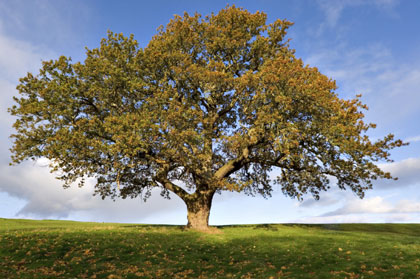
Vernon Heperi shared this story, “When James A. Garfield, once president of the United States, was the president of Hiram College, a father brought his son for admittance as a student. The father wanted the boy to take a course [of study] shorter than the one offered and exclaimed: “He can never take all that in! He wants to get through quicker. Can you arrange it for him?”

“Oh, yes,” replied President Garfield. “He can take a shorter course. It all depends on what you want to make of him. When God wants to make an oak, he takes one hundred years, but he only takes two months to make a squash.”1

There are no short cuts, wishing doesn’t get you too much past the dreaming stage. If you want to amount to something we have to do something and if we want to do something well, attain excellence, then put in the time and make it happen. Not to disparage the squash, but there is a little more majesty in an oak…it’s in us to succeed, we did not come into this life to fail.

Cheers,

Rick
1. Source: Heperi, Vernon L. December 06, 2005 BYU Devotional Building a Kauri Tree-Like Testimony http://speeches.byu.edu/?act=viewitem&id=1511

Nelson Mandela

Nelson Mandela

Nelson Mandela…an example of courage and grace under pressure

There is no passion to be found playing small, in settling for a life that is less than the one you are capable of living.”  Nelson Mandela

What is it that can make a man so sure of his convictions that he is able to endure years in jail, decades in fact, and upon his release live a life that seemingly forgives his jailers and the people who commanded them? Nelson Mandela was a victim of apartheid in South Africa sentenced to life in prison for fighting against a government that had minimized the majority of its population simply because it was black. After 27 years in prison on Robben Island Mandela was released and four short years later elected president of South Africa. A shocking turn of events. Mandela worked to build a united nation when so many who had been brutally oppressed for so long really wanted revenge he insisted upon a process of reconciliation that in large part brought Mandela the Nobel Peace Prize in 1993.

I would suggest that hating your enemies is pretty easy, loving your friends often easier but truly forgiving your enemies – working to draw them in as friends is truly an ideal to shoot for. Mandela provides us with much to consider as we explore our relationships with those who may even want to kill us.

While Hollywood is certainly capable of stretching the truth – the 2009 movie “Invictus” starring Morgan Freeman as Mandela presents the early efforts of Mandela to bring a broken country together through sport.

A few thoughts from Nelson Mandela to ponder in our interactions with others and efforts to lead, first our own lives and then perhaps as we strive to provide leadership with others.

For to be free is not merely to cast off one’s chains, but to live in a way that respects and enhances the freedom of others.

It is better to lead from behind and to put others in front, especially when you celebrate victory when nice things occur. You take the front line when there is danger. Then people will appreciate your leadership.”

If you want to make peace with your enemy, you have to work with your enemy. Then he becomes your partner.

Reconciliation and forgiveness starts here…a scene from Invictus

Cheers,

Rick